Hello colleagues!
I know that as we continue to develop our collection here at the Generic College University Library, the Islamic art resources, one of the most
popular collections we have on campus, will also continue to grow. While I know many of you have made
arrangements for your class room and your students with text books and written
works, I wanted to take some time to introduce you to some materials you may
find interesting in terms of images and current information in the field. This list is intended to aid you in your
lectures, as well as help you maintain a grasp on what is occurring in the
world beyond the doors of our university.
It is composed entirely of online sources, many of which, in addition to
being valuable tools, have social media pages, blogs, or e-mail newsletters, so
that you can have the latest sent directly to you without any hassle. While most are free for use, please note that
a few, including the databases we have licensed, must be accessed with your
faculty ID and password through the library homepage.
This guide is separated into three sections: Visual Resources,
which focuses mainly on sources for usable images, Visual Resources and
Sources of Information, which includes resources that provide both information
and images, and Sources of Information, which focuses mainly on sources
for text or information.
(Note: Images are owned by the institution or web resource they are posted with.)
Visual Resources
1. ARTstor
ARTstor is one of the largest databases we
have access to, and it provides over 1.6 million images (including an excellent
number of Islamic art pictures ranging from photographs to architecture and
illustration). Images can be used for
educational purposes, and can be added to presentations or dissertations. Most of the images are very high in quality,
and results for searches can be limited by time period, geography, and
classification. ARTstor also has a Facebook
page as well as a Twitter and a much less frequently used Tumblr. Though the emphasis of the three seems to be
“behind the scenes” information and general interest stories, their posts are
often entertaining and interesting.
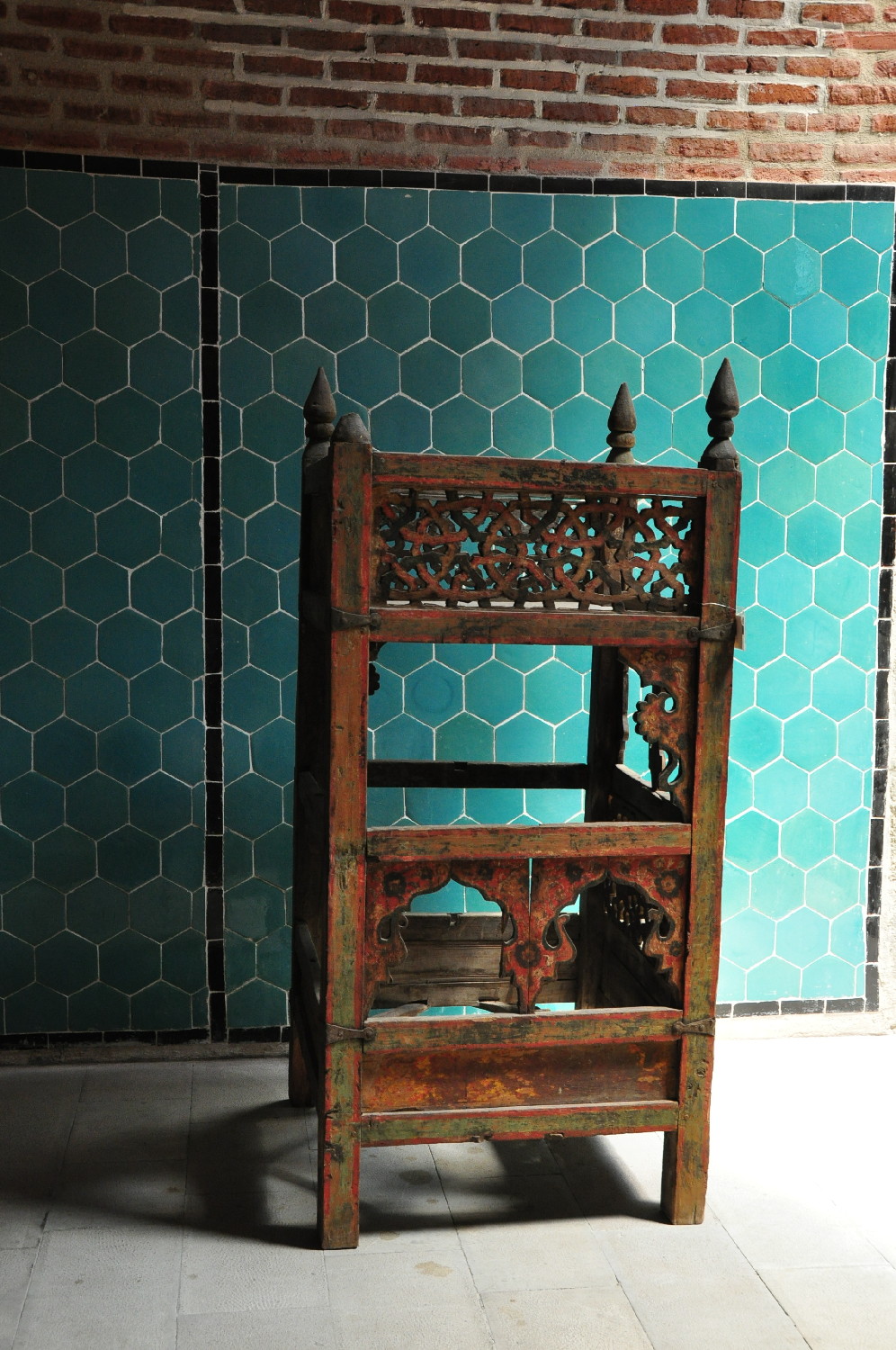 The Aga Khan Visual Archive includes a
large collection (composed of more than 120,000 slides and digital images) of
visual resources for Islamic architecture.
These images can be searched through the manual search bar on the home
page, or through a series of linked keywords based on Author, Subject, Date
Issued, and Worktype. Images are all
donated by photographers, professors, students, and architecture firms. Anyone who donates an image retains the
copyright, but users of the archive can access the photos and utilize them in
presentations, publications, or other educational purposes as long as proper
credit is given. The Archive is
maintained by Dome, home for any digitized content produced by the MIT
libraries.
The Aga Khan Visual Archive includes a
large collection (composed of more than 120,000 slides and digital images) of
visual resources for Islamic architecture.
These images can be searched through the manual search bar on the home
page, or through a series of linked keywords based on Author, Subject, Date
Issued, and Worktype. Images are all
donated by photographers, professors, students, and architecture firms. Anyone who donates an image retains the
copyright, but users of the archive can access the photos and utilize them in
presentations, publications, or other educational purposes as long as proper
credit is given. The Archive is
maintained by Dome, home for any digitized content produced by the MIT
libraries.
ArchNet, a collaboration between MIT and
the Aga Khan Trust for Culture, is another open access source for Islamic
architecture, and provides images in their digital library to historic and
current sites of interest, general views, project files, and a large assortment
of special collections. In searching for
images, you can search by typing in a keyword, or you can click the digital
libraries images link, choose an option, and specify what you would like to
see, including images based on country, building type, building usage, decade,
and site name. The site also has course
syllabi and publications free to read, but is infrequently updated (current
news for this year includes only two articles, and while there is a job link,
no jobs have been contributed). A
special perk to the site is the ability for members to store and upload their
own images into a workspace.
Registration is required for the workspace option (though it is free,
and ArchNet does have strict privacy limits), but searching the images requires
no sign up, and all the images are available for use. ArchNet images are uploaded by users, just
like the Aga Khan Visual Archive, and ArchNet has a “royalty-free, perpetual,
non-exclusive license to reproduce, transmit, modify, authorize the downloading
of, and otherwise publish such material (in whole or part) in any form, medium,
or technology now known or as may be later developed.”
4. The Smithsonian’s Museums of Asian Art - The
Freer and Sackler galleries (http://www.asia.si.edu/collections/islamic.asp)
The Freer and Sackler galleries hold a
large collection of Islamic art that can be searched online. The collection is relatively large, and boasts
a specialty in ceramics and illuminated manuscripts. Though images can be easily found and
browsed, they require purchase to use. Our library did acquire a digital image set on
CD with some of the most popular or important images included from the museum’s
Islamic art collection, but please let me know if there are additional images
you would like access to.
5. The Los Angeles County Museum of Art (http://collections.lacma.org/search/site/islamic?f[0]=bm_field_has_image%3Atrue)
The Los Angeles County Museum of Art (LACMA) has quite the collection of Islamic
art images, and many images of pieces that do not show up in other
resources. Their collection can be
broadly browsed, or you can limit your search by Artist, Classification,
Curatorial Areas, Chronology, or Museum Location. Many of their images (over 20,000) are
considered in the public domain (most of which appear on the Museum’s Flickr
page), but some are protected by copyright.
Click underneath an image to double check. In addition to their Flickr, the LACMA also
has a Facebook, Youtube channel, and Twitter account, but as a multi-collection
museum, these sites are not solely dedicated to Islamic art.
6. Detroit Institute of Art (http://www.dia.org/art/search-collection.aspx?department=Islamic+Art)
The Detroit Institute of Art’s (DIA) collection of
Islamic art is not as large as some of the previously mentioned sites, but the
images available are of high quality and are well documented. They cover a range of Islamic art as well, and
include architectural details like tile alongside Koran pages, Bowls, Carpets,
and Jewelry. The DIA is a heavy user of
social media, and they have a newsletter you can sign up, but they have strict copyright policies, so their images are less versatile for use.
Visual Resources
and Sources of Information
Islamic Arts Magazine is an online magazine
we have a current subscription to, though if you need a copy from before 2012,
please let me know, as we will need to order it in its physical form. This magazine is an excellent resource for
keeping up to date on both modern works/exhibits and contemporary scholarship
occurring in the Islamic art world.
Articles are offered on everything from history and exhibits to calligraphy,
photography, and ceramics. They cover
many recent areas of interest and are updated often. In addition to articles, http://islamicartsmagazine.com/ also
hosts a gallery of images that can be sorted by a variety of different
keywords. Anything from Islamic Arts
Magazine is for personal use only, but they are a fantastic resource for
current literature. In terms of keeping
you in the loop, they also have a newsletter you can subscribe to, as well as a
decently active/updated Facebook and Twitter.
8. Doris Duke Foundation for Islamic Art (DDFA)
Collection at Shangri La (http://www.shangrilahawaii.org/Default.aspx)
The DDFA collection at Shangri La is a
collection of over 2,500 items acquired over the life of Doris Duke, who began
collecting in her early twenties, and acquired her last piece almost 60 years
later. Though not comprehensive, almost
every piece from the collection, including furnishings of lamps and vases, tile
panels, and ceiling paintings, are documented and photographed. Images are available for use in educational
settings, as long as copyright is credited.
The site allows for keyword searching, and can limit results based on
medium, period, or country and region.
The Shangri La Center has residencies for scholars (for those of you
interested), and includes a section under the Islamic Art Collection link
called “Scholars Favorites”, in which scholars from around the world present
and discuss pieces from the collection.
These scholars also contribute to the Shangri La blog, but because they
are travelling academics, the site is infrequently updated, and less reliable
for current information.
 The Metropolitan Museum of Art not only
offers unique images for use in an educational setting, but also has an in-depth time line that provides
information on a variety of different styles, time periods, locations and major
events in the history of Islamic art.
This resource is an excellent one for many of your students, from those
just beginning to explore Islamic art as a whole to others looking for material
on contemporary works of modern art.
Information can also be searched through the use of an interactive map,
and there are over 900 thematic essays on art history to be explored. The Metropolitan Museum of Art is also well
connected to social media, and if you are interested, you can check out their
Facebook, Twitter, Pinterest (well supplied with over 1,000 images), or Flickr
through links on the museum’s main page.
The Metropolitan Museum of Art not only
offers unique images for use in an educational setting, but also has an in-depth time line that provides
information on a variety of different styles, time periods, locations and major
events in the history of Islamic art.
This resource is an excellent one for many of your students, from those
just beginning to explore Islamic art as a whole to others looking for material
on contemporary works of modern art.
Information can also be searched through the use of an interactive map,
and there are over 900 thematic essays on art history to be explored. The Metropolitan Museum of Art is also well
connected to social media, and if you are interested, you can check out their
Facebook, Twitter, Pinterest (well supplied with over 1,000 images), or Flickr
through links on the museum’s main page.
10. Oxford Art Online – Grove Art Online
Oxford Art Online is the access point for
Grove Art Online, an art database that contains images, articles, and biographies. When searching the Grove Art Online site, you
can select from a huge selection of terms, dates, geography, people, and styles
to refine your results, though searching is not always intuitive or easy to
conduct. Please contact me if you need
any help, or would like to learn how to search this resource. Articles
can be lengthy, but are incredibly informative. Images from this collection can be printed and
displayed, but cannot be distributed or used in any electronic network.
Sources of
Information
11. Art Full Text
Art Full Text offers a wide array of
publications on a variety of topics, including magazine articles, trade
publications, and scholarly articles.
Though Art Full Text is not focused solely on Islamic art, it can
provide excellent material for both current and historical research. Results can be narrowed by date and type of
publication, so if any of you are interested in only the most recent academic
journals, you can tailor your search to produce such information. You can also limit by subject and specific
publication title, though I would recommend avoiding that feature unless you
know exactly what you want, as the search function is not always flawless, and
you may eliminate some potentially valid materials by setting such strict
search standards. Though not
comprehensive, I would recommend a quick search in Art Full Text, as it may
have relevant textual information for you.
Created by PBS and narrated by Susan Sarandon, this hour and a half special encompasses over 1400 years of history and discusses the beginnings of Islamic arts, as well as its growth over time. Another excellent resource for students, this film is well composed and informative.
13. Harvard’s
Guide to Research in Islamic Art and Architecture (http://guides.library.harvard.edu/friendly.php?s=islamic-art&gid=4877)
Harvard’s Guide to Research in Islamic Art and
Architecture is a good base source for information on texts related to Islamic
art. While my guide is entirely online
resources, the Harvard Guide is mainly concrete sources, (many of which we hold
within the main library, make sure to take a peek at the catalog!). If you are adverse to working with online
material, need more extensive information on a topic, subject, or region, or
desire a list of valuable texts, this guide could be very useful for you.

No comments:
Post a Comment