Blog Post by Christian Guerra
What is it?

A Catalogues Raisonnés is a methodical list that is assembles, compartmentalized and details the works of artists. Through a process of inventory and documentation, providing both an overview and a detailed description of a collection.
How is it created?
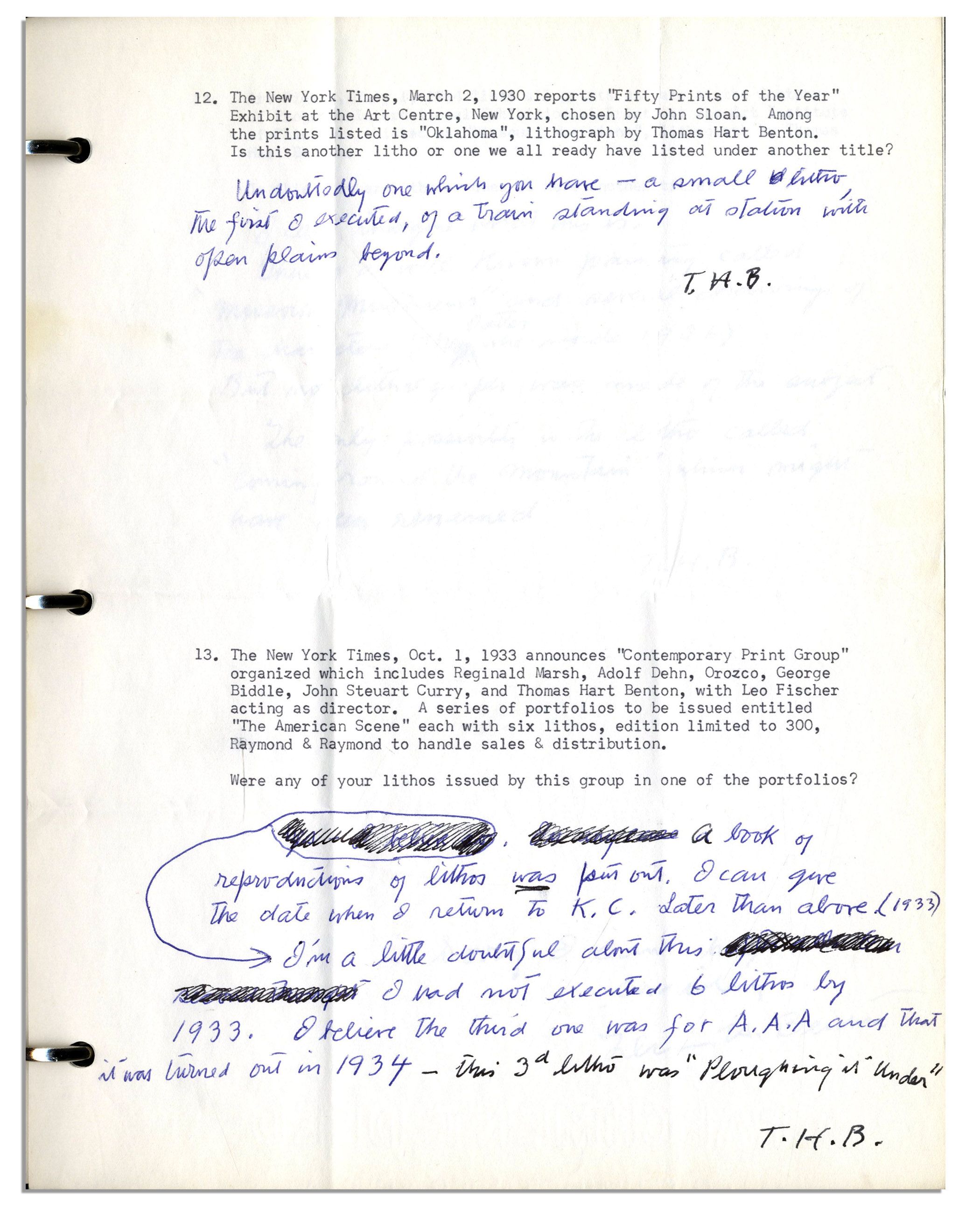 Each individual piece of artwork is described, analyzed and placed in the context of the artist's creative process. Each of the works is reproduced and accompanied by detailed notes: technical information, bibliographical and historical data along with commentary and sometimes with related information. The development of a catalogue is a painstaking process, involving sifting through the data and cross-checking, undertaking additional research in the field, verifying facts and interdisciplinary research (such as the records census records, medical documentation of infectious diseases, and financial records) so as to enhance both the breadth and depth of the scholarly research.
How are they organized?
Once this process of assemblage and evaluation are completed the decisions of how the work is to be ordered can be done many ways, chronologically, alphabetically, theme, major subject, and or by the choice of the scholar compiling the list. Keep in mind that not all artists date or sign their work.
Here are examples of classification gathered from NYPL’s website that might be included in the catalogue raisonné:( http://www.nypl.org/locations/tid/36/node/29583)
· Title and title variations
· Dimension/Size
· Date and place a work was created
· Medium
· Current location/owner at time of publication
· Provenance (history of ownership)
· Exhibition history
· Condition of the work
· Bibliography/Literature that discusses the work
· Essay(s) on the artist
· Critical assessments and remarks
· Full description of the work
· Signatures, Inscriptions and Monograms of the artist
· Reproduction of each work
· List of works attributed, lost, destroyed and fakes
· Catalog number
What makes them unique?
Establishing the catalogue of the complete work of artists is a culmination of a (professional) lifetime of work: 35 years for Alexandre Ananoff’s Fragonard catalogue raisonné, 40 years for Daniel Wildenstein’s Monet catalogue raisonné, and 60 years for Antoine Salomon and Guy Cogeval’s Vuillard catalogue raisonné.

The catalogue is the concentrated mixture of the visual representations of the collection and the intellectual documentations that are assembled into easily transportable document. These catalogue raisonnés don't become "outdated" the unique information that is produced is used to build the cannon of scholarly discussion.
Issues: Authentication
During the process of assembling the catalogue, a consultative committee plays an essential role in deciding whether or not a work should be included. Most committees are formed of art historians, and/or the descendants or legal beneficiaries of the painter concerned, and of the author(s) of the catalogue.
The inclusion or the exclusion of items in the catalogue have serious financial/legal repercussions for owners, dealers, scholars, and other experts in the field that have staked their credibility or investments on works attributed to an artist. After the examination by the committee and based on their opinions, a recommendation is made in the form of the intention to include or not to include the work; a third option that is mostly used to protect the authors of the catalogue from litigation is to classify the work in question as "continuing the examination process."
 Issues: Authorship
As discussed in the Lobel article there are issues that arise when denoting authorship of works of art. Issues he points out are based on the artistic process of Andy Warhol, specifically his paintings/silk screens. These issues of an individual author are present in works of old masters as well. The use (overuse) of assistance in creating works attributes solely to a single master sometimes only done under the direction of the master. Moreover is was common that artist’s "original" version are produced with fully autograph second versions of a composition, either on commission or for the open market.
This theme of authorship is continued on to catalogues themselves once being attributed to a single person now most, if not all, are produced by a large committee with research assistance, appraisers, art historians and art librarians.
Issues: Medium
 The issue of a “forced” structure that applies to all mediums and modes of documentation is viewed as a hindrance to compiling multimedia collections. Artist that incorporate performances with there exhibitions don't fit easily into the catalogue raisonné paradigm. The issue of reproducing the works in a book format can be limiting, that is why many new catalogue raisonnés are being produced online.
Other sources of information:
International Foundation for Art Research (IFAR)
Catalogue Raisonné Scholars Association (CRSA)
Louise Bourgeois: The Complete Prints & Books
Gemini G.E.L. Online Catalogue Raisonné
The Roy Lichtenstein catalogue raisonné
Frederick Ferdinand Schafer
In the process of being completed:
Richard Diebenkorn Catalogue Raisonné
The Andy Warhol Catalogue Raisonné: Paintings, Sculptures, and Drawings
List of articles used :
Franklin, J. From Inventory to Virtual Catalog: Notes on the ‘Catalogue Raisonné’. Art Documentation 22, no. 1 (2003): 41–45.
Lobel, Michael. Authorizing Warhol. Art Journal, July 20, 2004.
Catalogue Raisonné Scholars Association. CRSA Forum. Williamstown, Mass: Catalogue Raisonné Scholars Association. Accessed June 21, 2012
Lauder, Adam. "Liberty of the Compiler": Catalogue Raisonné as Metaphor for Collaborative Design. Art Documentation: Journal of the Art Libraries Society of North America , Vol. 30, No. 2 (Fall 2011), pp. 14-16, 18-22
Delahunty, Gavin. "Carl Andre: The Complete Poems". CRSA Forum. Head of Exhibitions and Display, Tate Liverpool, UK 

No comments:
Post a Comment